
Sore vs. Injured – 3 Red Flags Parents Miss When There is an Injury
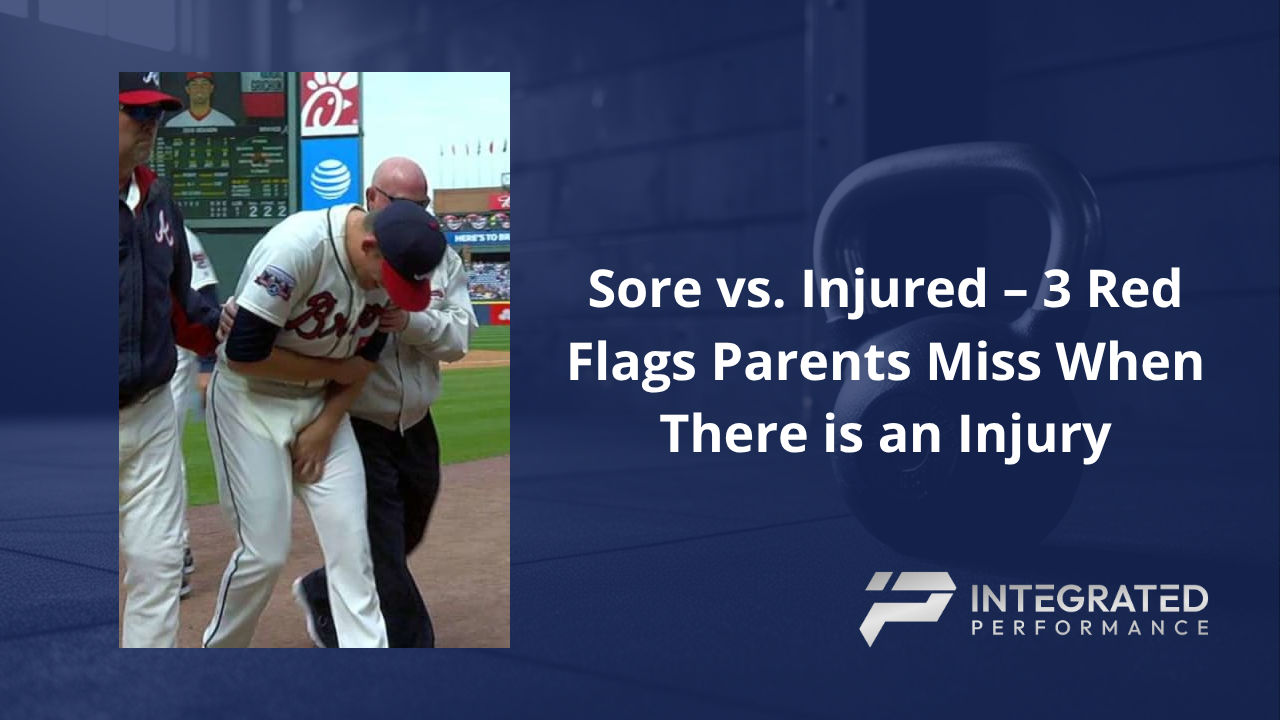
Opening Day in Indiana is a rush. We’ve got games at Grand Park in Westfield, and teams from Noblesville, Westfield, and Carmel are traveling south to Tennessee to find some warmer weather. The adrenaline is high, the radar guns are out, and your son is finally letting it rip.
But by Monday morning, the reality of the season hits.
“Dad, my arm hurts.” It’s the one phrase no baseball parent wants to hear. Suddenly, you’re in a tough spot. Is this just the “good” soreness that comes with being back in game shape? Or is this the start of a season-ending injury?
You don’t want to be the parent who shuts him down for nothing, but you definitely don’t want to be the one who says, “Rub some dirt on it,” only to find out he’s headed for surgery a week later.
The "Ibuprofen Deficiency" Trap
A mentor of mine used to call this out, and it stuck with me. When we are dehydrated, we have a water deficiency. When we are hungry, we have a food deficiency. So, if your son needs Ibuprofen to get through a bullpen or a start, he has an "Ibuprofen deficiency"... right?
Wrong.
If your athlete needs Advil just to make it through a game, that is a massive red flag. He isn't "managing soreness"—he’s turning off his body's check engine light. Masking pain with meds is how a "twinge" becomes a tear.
Knowing the Difference:
- Soreness: Feels "tight" or "dull" in the muscle belly (like the back of the shoulder). It usually feels better after a good warm-up or light movement.
- Pain: It’s sharp, localized (inside the elbow or deep in the front of the shoulder), and it gets worse as the game goes on.
3 Red Flags Parents Often Miss
If you see these three things, it’s time to stop the "wait and see" approach and get an expert look.
1. The "First Throw" Sharpness
Pain is typically sharp and very localized—meaning he can point to one exact spot with one finger. If that sharp feeling doesn't disappear after the first few warm-up throws, it’s not "stiffness." It’s an injury.
2. The Velocity Drop
Muscle soreness might make you feel sluggish, but once the blood starts flowing, the muscle regains its length and you can still hit your numbers. Pain is different. Your brain will literally "down-regulate" your muscles to protect you from further damage. If the velo is dropping, the body is forcing him to slow down. Listen to it.
3. Pain That Lasts Into the Night
Soreness usually fades after a few hours and rarely bothers an athlete at rest. If your son is tossing and turning because he can’t find a comfortable position for his arm, or if it hurts just sitting on the couch, that’s a major red flag.
Expert Care in Westfield, Carmel, and Noblesville
If your son is experiencing any of these red flags, don't leave his season to chance.
At Integrated Performance, we bring years of experience working with MLB organizations to the players here in Central Indiana. We operate out of the Indiana Baseball Academy in Westfield to provide elite-level Physical Therapy that bridges the gap between the clinic and the mound.
Don't wait for the "pop." Call us today at 812-686-9550 or Schedule an Evaluation to get a data-driven plan that keeps your athlete healthy and high-performing all season long!
Want to Make Sure You Do Not Miss a Post?
Enter your information for FREE newsletters, content, and special offers from Integrated Performance
We will not SPAM (unsub at any time)
