
Pitcher Velocity Loss: Dead Arm vs. Shoulder Injury
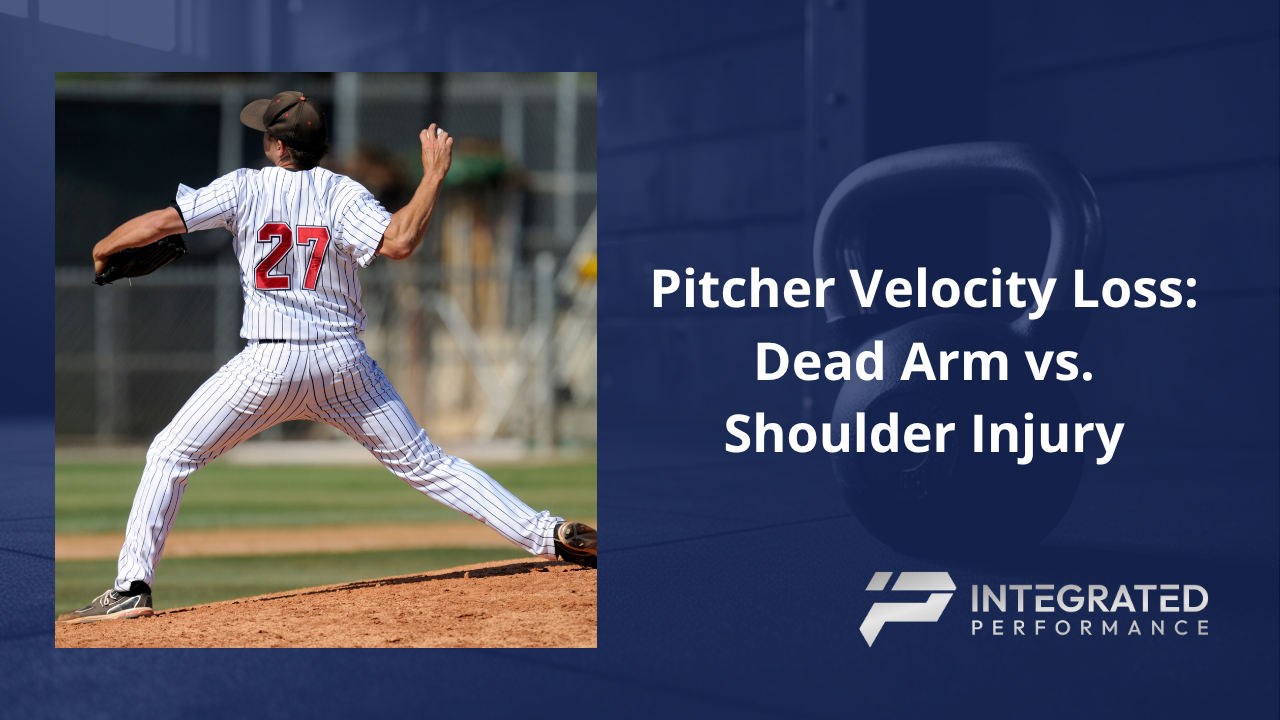
Few things terrify a baseball parent more than watching their son come off the mound, drop 5 mph on his fastball, and say his arm feels so heavy he can barely lift it.
When your child experiences sudden velocity loss and severe arm heaviness, it is easy to assume the worst and fear a career-ending structural tear.
Understanding the difference between dynamic rotator cuff fatigue and an underlying structural injury is the key to protecting his college recruitment goals and keeping his arm healthy.
Is Dead Arm Syndrome Normal Fatigue or an Early Sign of a Torn Labrum?
At its core, "dead arm" fatigue is an endurance breakdown of your shoulder's dynamic stabilizers—specifically the rotator cuff.
When the rotator cuff fatigues, it loses its ability to keep the humerus (ball) centered inside the glenoid (socket) during high-velocity pitching. This subtle joint instability creates extreme muscle weakness and a heavy sensation because the arm is no longer centered efficiently.
While dead arm fatigue starts as a muscle endurance issue, pitching through it is dangerous. As fatigue worsens, the humerus pinches against surrounding tissue, causing impingement and forcing the bicep tendon and labrum to absorb excess force, which can escalate into a SLAP lesion or labral tear. Clinical studies show that pitching with arm fatigue is one of the single greatest risk factors for serious shoulder and elbow breakdown (Salamh et al., 2020).
How Long Should Dead Arm Last with Rest?
When a pitcher first experiences a dead arm, the heavy feeling should begin relaxing overnight and show noticeable improvement within the first day or two.
With proper rest and recovery, he should see a clear difference over 1 to 2 weeks and be able to begin light throwing again.
However, if you rest him for 10 to 14 days and the exact same heavy, exhausted feeling returns the moment he steps back on the mound, rest alone is not the answer. That persistence indicates severe mobility restrictions or structural tissue trauma in the labrum or rotator cuff that requires an MRI or formal physical therapy evaluation.
Can Pitching Through Dead Arm Cause Permanent Damage like Tommy John?
The short answer is a firm yes.
When rotator cuff fatigue causes shoulder instability, the body compensates by overworking secondary structures, leading to rotator cuff tendinitis and eventual tearing. Continuous pitching with unstable mechanics causes repeated pinching of the labrum until the tissue structurally fails.
Even worse, shoulder instability creates a massive energy leak that cascades down the kinetic chain directly into the elbow. When the shoulder cannot stabilize the arm, extreme rotational and valgus torque shifts directly onto the Ulnar Collateral Ligament (UCL), significantly increasing the risk of a Tommy John tear (Wasserberger et al., 2019).
Physical Therapy Tests and Home Evaluations
In the clinic, we utilize specific orthopedic tests to differentiate between simple muscle fatigue and structural damage:
- Labral Tear Testing: We perform clinical tests like the Crank Test and Bicep Load Test to reproduce labral clicks or deep pain.
- Impingement Testing: Tests such as the Hawkins-Kennedy or Neer Test help detect internal pinching and impingement syndromes.
- Rotator Cuff Strength: Isometric strength testing remains the single biggest indicator of dead arm susceptibility. Pitchers with weak rotator cuff metrics fatigue faster, lose velocity, and face double the injury risk compared to strong pitchers (Shitara et al., 2022; Byram et al., 2010).
Key Takeaways for Parents
- Dead Arm Is Fatigue First: It stems from dynamic stabilizer (rotator cuff) endurance breakdown that disrupts ball-and-socket alignment.
- 10-to-14-Day Rule: If 2 weeks of rest does not eliminate the heavy arm sensation upon returning to throw, seek an MRI or specialized physical therapy evaluation.
- Protect the Elbow: Pitching through dead arm forces the elbow to absorb shoulder stress, paving the way for UCL tears and Tommy John surgery.
- Target the Cuff: Building rotator cuff strength and endurance cuts pitching injury rates by over 50% and protects fastball velocity (Shitara et al., 2022).
Is arm fatigue threatening your son’s recruiting season?
Don't let dead arm fatigue turn into a serious labral or UCL tear. Book an in-clinic Pitcher's Arm Evaluation today, or download our free Arm Care & Mobility Protocol to rebuild his rotator cuff strength and get him back to dominating on the mound.
Want to Make Sure You Do Not Miss a Post?
Enter your information for FREE newsletters, content, and special offers from Integrated Performance
We will not SPAM (unsub at any time)
