
Build Pitching Velocity This Fall Without Arm Damage
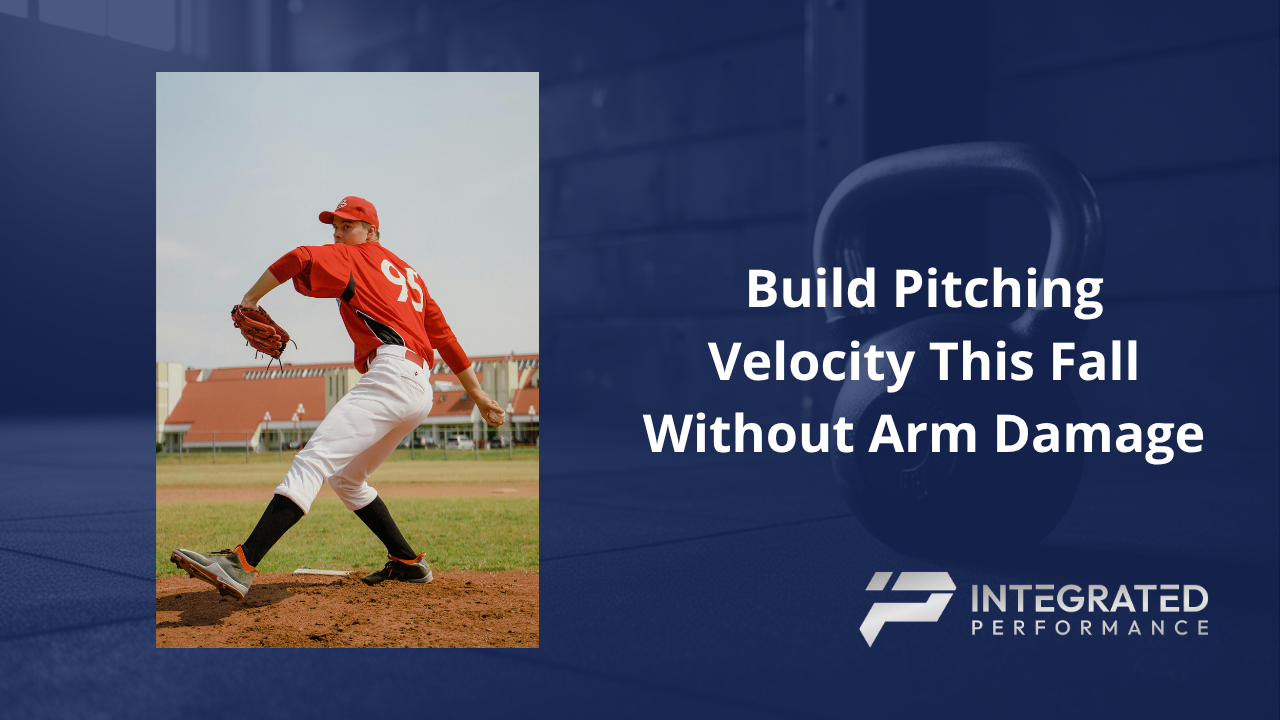
Social media is flooded with radar gun clips and fall velocity camps promising 3 to 5 mph gains in just six weeks. When you feel the ticking clock of college recruiting, handing over money for a weighted ball program feels like the fastest ticket to getting your son over 85 mph by spring.
Before you buy into weighted ball gimmicks, you need to know if his arm can actually handle that stress or if it is setting him up for a career-altering injury.
Are Weighted Ball Velocity Programs Safe for High School Pitchers?
A standard baseball weighs 5 ounces, so anything heavier is a weighted or overload ball and anything lighter is an light or underload ball.
Research confirms that weighted ball programs increase velocity primarily by forcing extreme shoulder external rotation, commonly known as layback. This extreme layback places immense valgus torque directly on the shoulder joint and the inner elbow, where the Ulnar Collateral Ligament (UCL) sits (Reinold et al., 2018;Okoroha et al., 2019).
Peer-reviewed studies show that 24% of pitchers in weighted ball programs suffer a time-loss injury—not just mild soreness, but injuries that shut them down completely. The spike in elbow torque combined with existing seasonal fatigue makes overload throwing a massive injury risk (Salamh et al., 2020).
At What Age Can a Pitcher Safely Start Weighted Ball Training?
Most middle school and high school pitchers already have abundant shoulder layback and range of motion. What they lack is the neuromuscular strength and core stability required to control and decelerate that extreme motion.
Pitchers under the age of 15 or 16 have not reached skeletal maturity, meaning the growth plates at the shoulder (humeral head) and elbow are still open. Throwing heavy balls applies extreme traction and shearing forces directly across those open growth plates, significantly increasing the risk of structural growth plate damage.
Instead of forcing open growth plates to handle heavy ball stress, younger athletes build far more sustainable velocity by enrolling in a full-body strength and conditioning program. Building lower-body power and core stability provides the foundation for high-velocity throwing without risking his joints (Lehman et al., 2013).
Overload vs. Underload Balls: Which One Is Safer?
Underload balls (lighter than 5 ounces) train neuromuscular speed and hand acceleration without increasing joint torque at the elbow or shoulder.
Research demonstrates that underload training safely builds arm speed and fastball velocity without increasing joint stress or injury rates (Erickson et al., 2020).
Conversely, overload balls (heavier than 5 ounces) generate massive joint forces that require high-level physical maturity and joint stability that most high schoolers simply do not possess. Throwing heavy balls without elite stability creates excessive stress on the UCL and shoulder labrum.
Should He Jump Straight from Summer Games into Fall Velocity Camps?
If your son logged 50 to 60+ innings this summer, jumping straight into a high-intent velocity program is looking for trouble.
After a long travel season, his arm needs a dedicated period for tissue recovery, restoring lost shoulder internal rotation, and building foundational lower-body strength. Taking more than two weeks off requires a structured on-ramping ramp-up before resuming high-intent throwing.
Fall is the single best time to focus on off-season strength and rotational power training. Increasing his overall physical power maintains and increases velocity far more effectively than trying to "hack" speed with heavy balls (Gdovin et al., 2025).
Red Flags: When to Shut Him Down and Get an Evaluation
If your son shows any of the following warning signs during or after throwing, stop the workout immediately and get a clinical physical therapy assessment:
- Inner elbow or joint soreness linger longer than two hours after throwing.
- Sharp, biting pain on ball release or during the follow-through deceleration phase.
- Relying on ibuprofen, ice, or heating pads just to get through a throwing workout.
- A sudden loss of fastball command or noticeable changes in his natural release point.
Key Takeaways for Parents
- Overload Risks: Weighted ball programs carry a 24% time-loss injury rate due to extreme valgus torque on the inner elbow and UCL.
- Protect Open Growth Plates: Athletes under 16 with open growth plates should avoid heavy overload balls to prevent shearing injuries.
- Underload Is Safer: Lighter balls build neuromuscular arm speed without increasing joint stress.
- Prioritize True Strength: Fall velocity is best built through full-body strength and lower-body power training, not quick-fix throwing gimmicks.
Want to build real fastball velocity without risking your son's arm?
Stop guessing with fall velocity camps. Book an in-clinic assessment to build a custom strength, mobility, and throwing protocol engineered for maximum velocity and joint health.
Want to Make Sure You Do Not Miss a Post?
Enter your information for FREE newsletters, content, and special offers from Integrated Performance
We will not SPAM (unsub at any time)
